Yes — that recognition is real, and it's worth taking seriously. Late self-recognition of autism or ADHD is common, especially for adults who got missed for years. You don't need anyone's permission to explore it. The relief you felt is information, not a fluke. The smallest next step is a free 10–15 minute Fit Check — no pressure, no commitment.
The moment you can't un-see
You saw the video. Or your kid got assessed and you recognized yourself in the report. Or a friend said "I'm Autistic" and described their inner life, and something in your chest went wait — doesn't everyone do that? And then, slowly, no. No, they don't.
So now you're here, doing the thing you do with everything: researching it to death at 1 a.m. instead of sleeping. Fitting, honestly.
Here's the first thing I want to say, plainly, before anything else. That recognition is meaningful. You don't need a gatekeeper to hand you permission to take it seriously. You noticed a pattern in your own life that nobody else could have seen from the outside, because you're the only one who's lived inside your head. That's not nothing. That's the whole point.
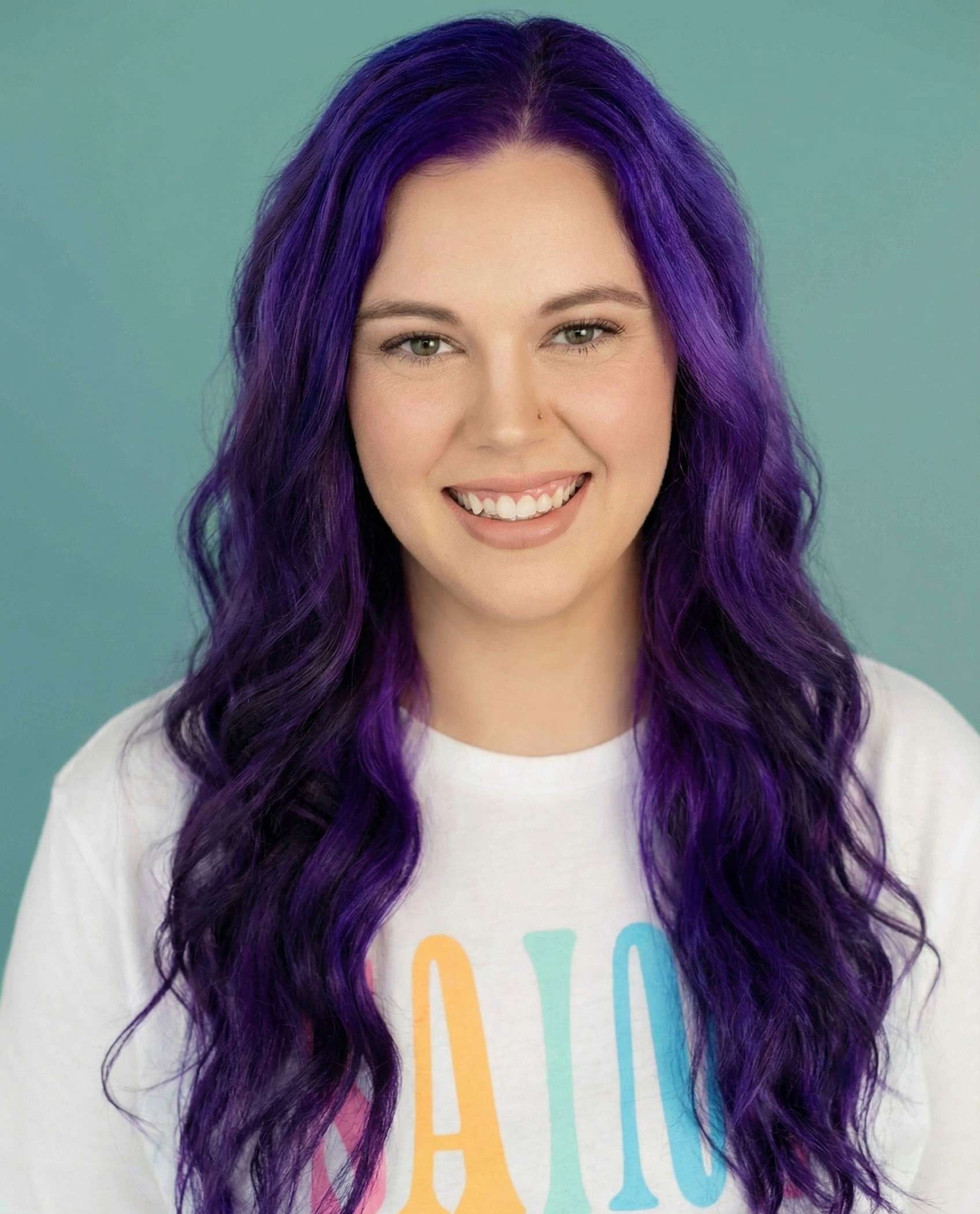
I'm Liz. I'm a Licensed Professional Counselor, and I'm AuDHD myself — so I'm not studying this from across a clipboard. I've had my own version of the 1 a.m. spiral. I built this practice for people standing exactly where you're standing.
The relief is data, not a trick
A lot of people get scared by the relief. They feel this huge, embarrassing wave of oh thank god, there's a reason — and then immediately distrust it. "Maybe I just want there to be a reason. Maybe I'm forcing the pieces to fit."
Let me reframe that. When an explanation makes years of confusing, painful, "why is this so hard for me when it's easy for everyone else" moments suddenly click into a coherent story — that resonance is information. It's not proof, but it's a door worth walking through. You're not inventing a pattern. You're recognizing one that was always there, under the masking, under the workarounds you built so well that nobody (including you) could see how much they cost.
There's real science underneath that exhaustion, too. Researchers have documented masking — camouflaging your natural responses to pass as "normal" — as a pattern linked to anxiety, depression, and burnout (Hull et al., Molecular Autism, 2021). If you've been running that program for thirty years, of course you're tired. Not the kind of tired sleep fixes. The kind where your RAM has been full since roughly 2003 and you've just been quietly closing tabs to keep the machine from crashing.
So no — relief isn't you "wanting attention." It's your nervous system recognizing the manual it was never given.
"But what if I'm faking it?"
I want to talk to the imposter directly, because almost everyone I meet is carrying it.
The fear sounds like: What if I'm not "really" neurodivergent? What if I'm just lazy / sensitive / dramatic and I latched onto this to excuse it? What if someone "real" needs this more than me?
Two things.
First — the people who are genuinely faking, performing for clout, do not lie awake terrified they're faking. That spiral of self-doubt you're in right now? That's not what fakers do. That's what thoughtful, over-responsible, chronically-told-they're-"too-much" people do. The imposter fear is, ironically, one of the most neurodivergent experiences there is.
Second — you do not have to be "bad enough" to deserve clarity. There's a story a lot of us absorbed: I'm coping, I have a job, I'm not in crisis, so I shouldn't take up space. But "I'm managing" usually means "I'm spending enormous hidden energy to look like I'm managing." You're allowed to want to understand your own brain before the wheels come off. Getting clarity isn't taking a seat from someone sicker. It's not a lifeboat with limited spots. This is more like — your existing, lived reality is the thing worth listening to, and you're finally giving it a hearing.
Self-suspicion is valid — and increasingly recognized
Here's a fact I'll state plainly: adult self-identification of autism and ADHD is increasingly recognized as legitimate, precisely because formal assessment is expensive, waitlists are brutal, and bias means a lot of adults — especially women, people of color, and high-maskers — got missed for decades. Self-recognition is often where an accurate understanding starts. It is not a lesser version of knowing yourself.
That doesn't mean you stop there. It means your suspicion is a valid doorway, not a wild guess you should be ashamed of. If you want to walk through it toward more clarity, the door's open — at whatever pace you choose. I mean that. You set the speed.
"I tried therapy. It didn't fit."
If you've done traditional therapy and walked out feeling like you'd been handed worksheets when what you needed was to be understood — you're not difficult, and the therapist probably wasn't bad. A lot of standard approaches, including classic CBT, often don't fit the same way for a neurodivergent brain, because they weren't built for the same brain. "Just challenge the anxious thought" lands differently when the anxiety is your nervous system accurately reporting sensory overload, not a distortion to argue with.
So if part of you is bracing for more of that — more being told you're thinking wrong — I get the hesitation. This isn't that. The goal here isn't to fix you. It's to translate you. You're not broken — your brain came with a different user manual. We just never got handed the manual.
What actually happens — and why you won't "leave with nothing"
Here's the practical path, no mystery:
Step one: a free Fit Check. Ten to fifteen minutes, by phone or video — your call, and phone is optional. We talk, you ask me anything, and we both decide whether this is a fit. No pressure, no commitment, no credit card. If it's not right for you, I'll happily point you somewhere that is. The smallest possible first step exists on purpose.
Step two, if it fits: a Clarity Assessment. This is where I have to be careful and honest with you. I do not hand out DSM diagnoses. What you get instead is what I call a User Manual for your brain — a deep, written, plain-language map of how you are wired: your executive function, your sensory profile (what you seek, what you can't tolerate), your masking patterns, your strengths, your special interests, where the friction lives and why, and what actually helps. We don't test. We translate.
That's the answer to the quiet fear underneath all of this — what if I do all this and walk away with nothing? You won't. Whether or not a formal label is ever attached anywhere, you walk away understanding yourself in concrete, usable terms. And if you already have a formal diagnosis from somewhere else, this still works — the manual builds on it. You can see how this fits the broader assessment approach, and how the late-discovery awakening you're moving through is genuinely common.
I'll also say this for the part of you bracing to be argued with: your experience is not up for debate here. The "disorder" framing is just one story someone else wrote about brains like ours. If you want it spelled out, your experience isn't up for debate — and I mean that as a working principle, not a slogan.
A note on the grief
It's okay if relief isn't the only thing you feel. A lot of people hit a wave of genuine anger — how much easier could my life have been if someone had told me at sixteen? That fury is legitimate. You're allowed to grieve the wasted effort and the years of thinking you were just bad at being a person. Toxic positivity would tell you to focus on the silver lining. I won't. Be furious if you're furious. Grief and relief can share the same room.
And if any of this tips into I'm not safe right now, that's worth a call or text to the 988 Suicide & Crisis Lifeline. That's a different kind of help than a manual, and it's okay to reach for it first — no shame in it, ever.
Here's the gentler truth on the other side: your brain can keep changing. Neuroplasticity is lifelong — meaningful change stays possible at any age, in your 30s, 50s, 70s. Understanding yourself isn't a consolation prize for getting clarity "late." In my experience, making sense of a hard story tends to be exactly where the real movement starts. The manual isn't the end. It's the part where you finally get to make informed choices instead of white-knuckling defaults that were never yours.
The honest money + meds part
So you can plan: the Clarity Assessment runs $125 an hour, and most adults need 3 to 6 hours — about $800 at most. You can do it weekly or all at once; your choice. The Fit Check is free. Insurance rarely covers this kind of assessment as "testing," especially through an LPC — but HSA/FSA dollars are eligible. If you do have coverage and want to try, it may require a Letter of Medical Necessity from my office, so call your plan before scheduling to ask. No surprises, no upsell.
And one boundary I'll always be straight about: I'm an LPC. I don't prescribe medication. If meds are part of your picture, that goes to a prescriber — a psychiatrist, your PCP, or a psych NP — and the manual can actually make that conversation far more precise.
Where to start
Nobody hands you a welcome packet and a lanyard after you realize you might be neurodivergent. There's no orientation. So let's make the first step the small one. You don't have to be sure. You don't have to have it figured out. You just have to be curious enough to talk for fifteen minutes.
When you're ready, here's how to get started, and if you want to see what life looks like on the other side of clarity, here's now what after you know.
Let's get at least a few of your ducks into the same pond. They don't have to be in a perfect row — mine never are.
Book a free 10–15 minute Fit Check. No commitment, no pressure — we'll just see if it's a fit. Start with a free Fit Check →
The Real Questions
No. Your self-recognition is a valid doorway, not a wild guess. Adult self-identification of ADHD and autism is increasingly recognized as legitimate, precisely because formal assessment is costly, waitlisted, and historically missed a lot of adults. You're allowed to explore this on your own authority — at your own pace.
The people genuinely faking don't lie awake terrified they're faking. That spiral is what thoughtful, over-responsible, told-they're-"too-much" people do — it's one of the most neurodivergent experiences there is. You don't have to be "bad enough" to deserve clarity. Your lived experience is the reality worth listening to.
If you got worksheets when you needed to be understood, you're not difficult — that approach often doesn't fit the same way, because it wasn't built for the same brain. This isn't about fixing your thinking. It's about translating how you're actually wired into something usable. We don't test. We translate.
No. I don't hand out DSM diagnoses — the output is a User Manual for your brain: a plain-language map of your executive function, sensory profile, masking, strengths, and what actually helps. Whether or not a label gets attached anywhere, you leave understanding yourself in concrete terms.
"Coping fine" usually means spending enormous hidden energy to look fine. You don't have to wait for the wheels to come off to understand your own brain, and getting clarity doesn't take a seat from someone sicker. Spending on understanding yourself isn't selfish — it's overdue.
Make the first step tiny: a free 10–15 minute Fit Check. We talk, you ask me anything, and we both decide if it's a fit. No commitment, no card, phone optional. You don't have to be sure of anything — just curious enough for fifteen minutes.
The Clarity Assessment is $125 an hour; most adults need 3–6 hours, about $800 at most, weekly or all at once — your choice. The Fit Check is free. Insurance rarely covers this as "testing," especially through an LPC, but HSA/FSA dollars are eligible.